Restoration · instrument guide
A filling passes through four stages: isolate the tooth, remove the caries, place the material and shape it. Each stage has its own hand instruments. This guide groups them, explains how cutting instruments are named, and shows which instrument does what.
Restorative instruments fall into four groups: cutting instruments (excavators, chisels, hatchets, gingival margin trimmers), placing and shaping instruments (plastic filling instruments, composite spatulas, pluggers, burnishers, carvers), matrix systems and rubber dam. Cutting instruments are described by G.V. Black's formula: blade width, blade length and blade angle.
What instruments are used in restorative dentistry?
| Group | Instruments | Job |
|---|---|---|
| Isolation | Rubber dam punch, clamps, clamp forceps, frame | Keep the field dry and clean |
| Cutting | Spoon and round excavators, chisels, hatchets, hoes, gingival margin trimmers | Remove caries and refine the cavity walls and margins |
| Placing & shaping | Plastic filling instruments, composite spatulas, pluggers, condensers, burnishers, carvers | Carry, pack, contour and finish the material |
| Matrix | Tofflemire retainers, bands, wedges | Rebuild the missing wall of a Class II cavity |
For a shortlist of everyday picks, see 15 essential restorative instruments.
Cutting
Hand cutting instruments in operative dentistry
Hand cutting instruments are traditionally split into excavators and chisels:
| Type | What it is | Used for |
|---|---|---|
| Spoon excavator | Curved blade with a rounded (discoid) or claw-shaped (cleoid) edge | Scooping out soft carious dentine |
| Hatchet | Cutting edge in line with the handle axis | Cutting enamel and refining internal line angles |
| Hoe | Cutting edge at right angles to the handle, used with a pull stroke | Planing cavity walls and floors |
| Chisel | Straight, Wedelstaedt (slightly curved) or binangle blade | Splitting and planing enamel walls |
| Gingival margin trimmer | Curved blade, mesial and distal pairs | Bevelling the gingival margin of Class II preparations |
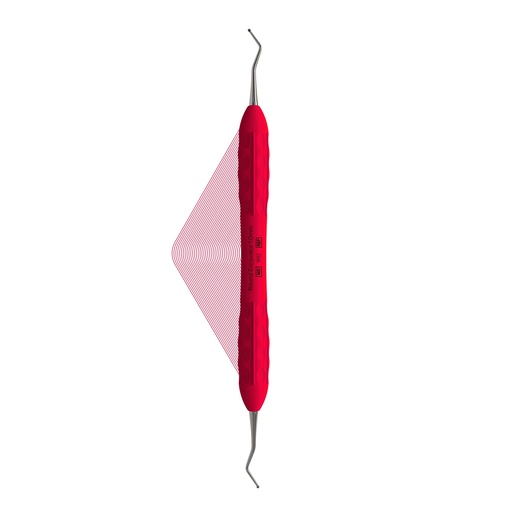 Round excavatorDiscoid excavatorRemoves soft caries with a scooping motion.View instrument →
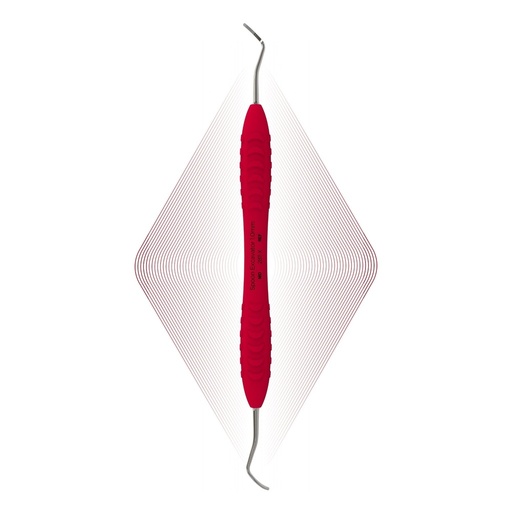 Spoon excavatorOval excavatorLarger spoon for bulk caries removal.View instrument →
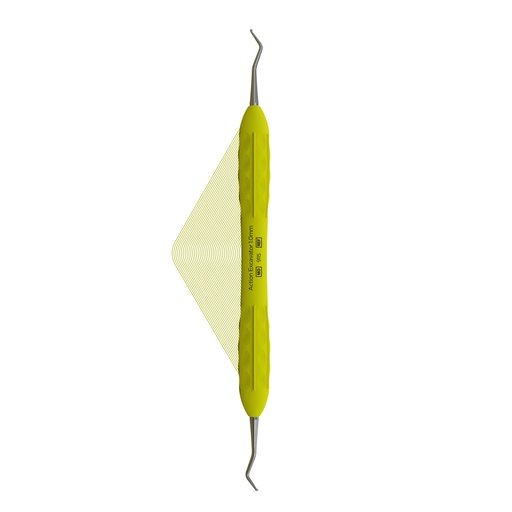 Action excavatorSharp-edge excavatorFine excavation close to the pulp.View instrument →
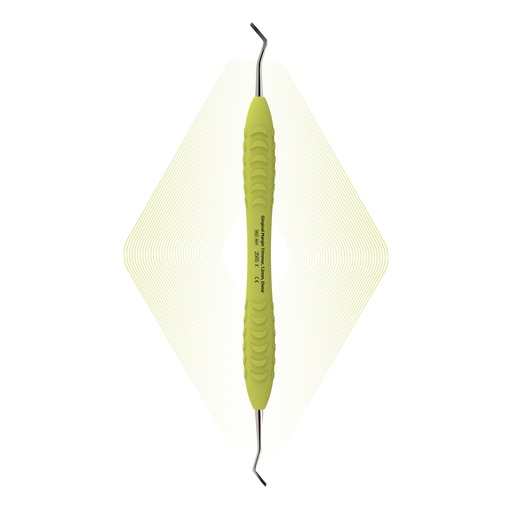 Gingival margin trimmerGMT, distalBevels the gingival margin in Class II cavities.View instrument →
What is G.V. Black's instrument formula?
G.V. Black gave every cutting instrument a number code that describes the working end. It is printed on many excavators and chisels.
| Number | Describes | Unit |
|---|---|---|
| 1st | Width of the blade (primary cutting edge) | Tenths of a millimetre |
| 2nd (4-number code only) | Angle of the primary cutting edge to the handle axis | Centigrades (hundredths of a circle) |
| Next | Length of the blade | Millimetres |
| Last | Angle of the blade to the handle axis | Centigrades |
Example: a 10-7-14 hoe has a 1.0 mm wide blade, 7 mm long, set at 14 centigrades to the handle. A 4-number code such as 10-85-8-14 adds the cutting-edge angle (85) as the second number, as on gingival margin trimmers.
Placing & shaping
What instrument is used to place composite?
Composite is carried with a plastic filling instrument or spatula, packed with a plugger and shaped with a burnisher or carver. Non-stick coated instruments stop the material from pulling away.
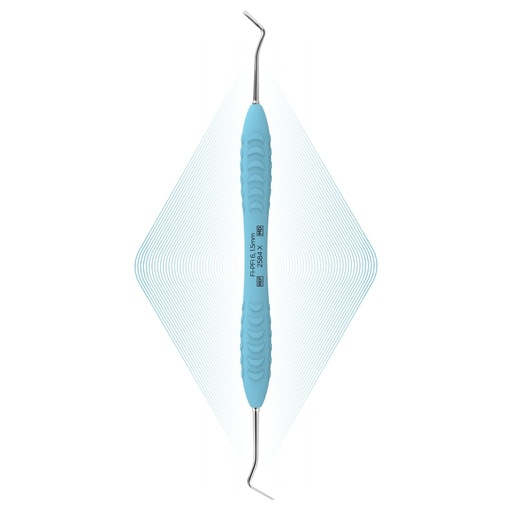 Filling instrument PFI 6Plastic filling instrumentCarries and shapes composite and liners.View instrument →
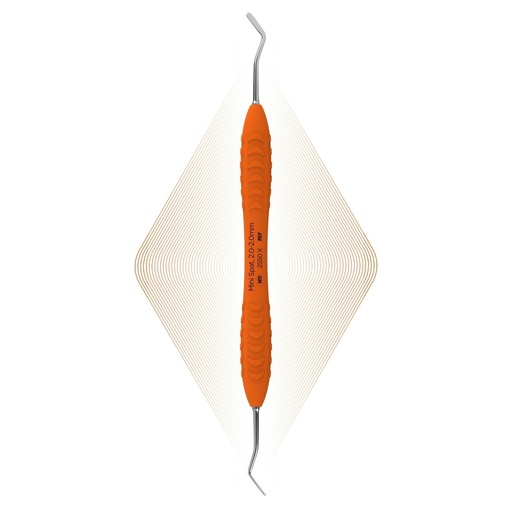 Mini spatulaComposite spatulaPlaces and smooths composite in the cavity.View instrument →
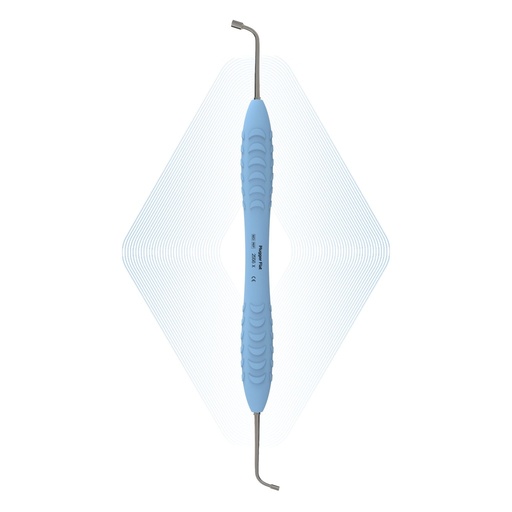 Plugger, flatComposite pluggerPacks composite against the walls and matrix.View instrument →
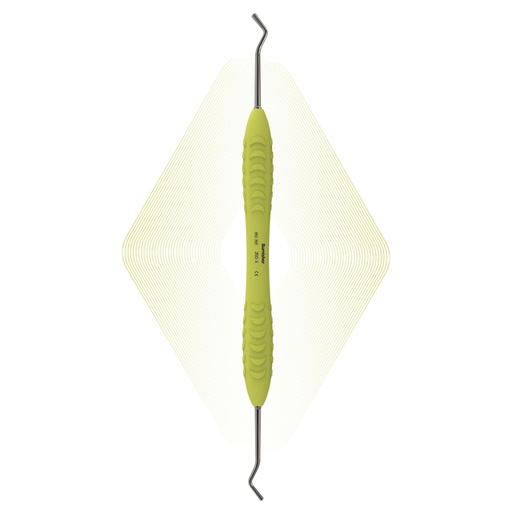 BurnisherBall burnisherAdapts material and matrix; smooths the surface.View instrument →
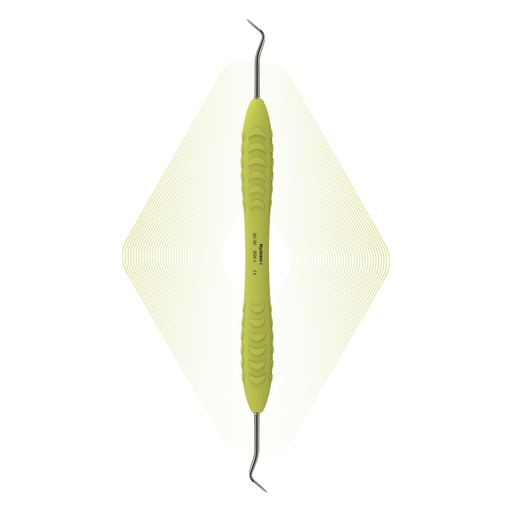 Carver Nystrøm IAnatomical carverCarves occlusal anatomy into the restoration.View instrument →
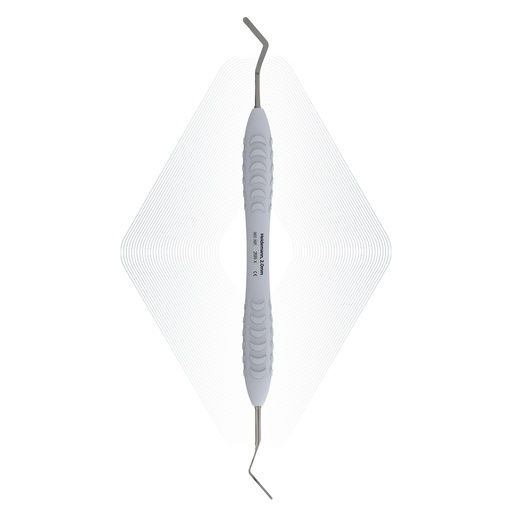 Heidemann spatulaCement spatulaMixes and places cements and liners.View instrument →
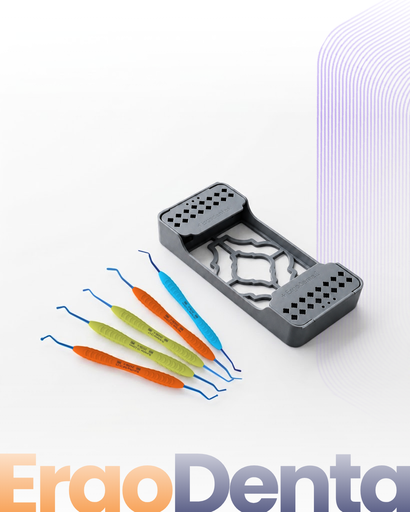 ErgoSlip compo setNon-stick composite setCoated instruments so composite stays on the tooth.View instrument →
Matrix & isolation
Matrix systems and rubber dam
A matrix rebuilds the missing wall of a Class II cavity; rubber dam keeps the field dry so the bond is reliable.
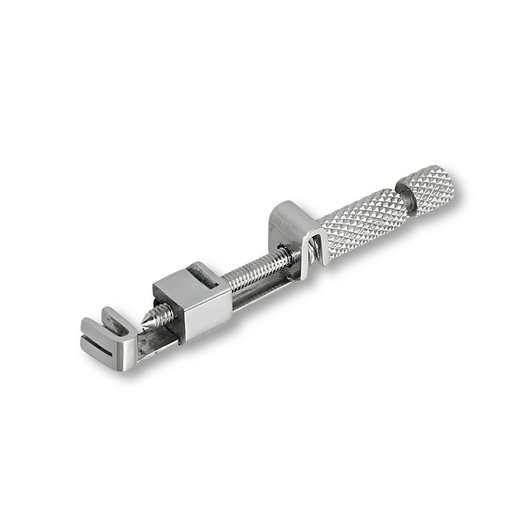 Tofflemire retainerMatrix band holderHolds a band around the tooth for Class II restorations.View instrument →
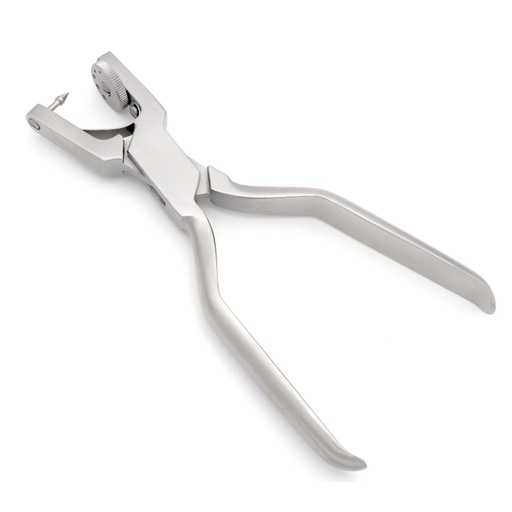 Ainsworth rubber dam punchDam punchPunches holes in the dam sheet.View instrument →
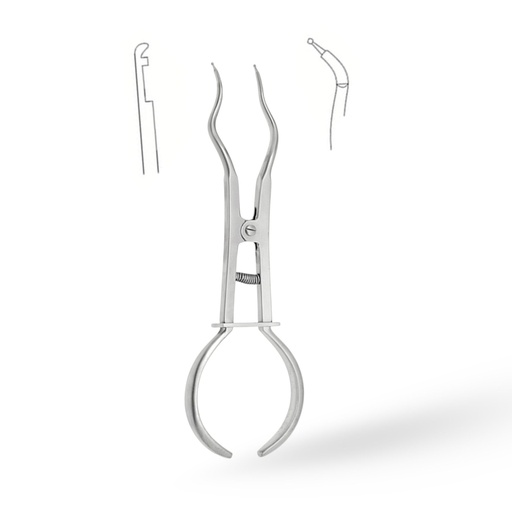 Clamp forceps, BrewerRubber dam forcepsOpens, places and removes the clamp.View instrument →
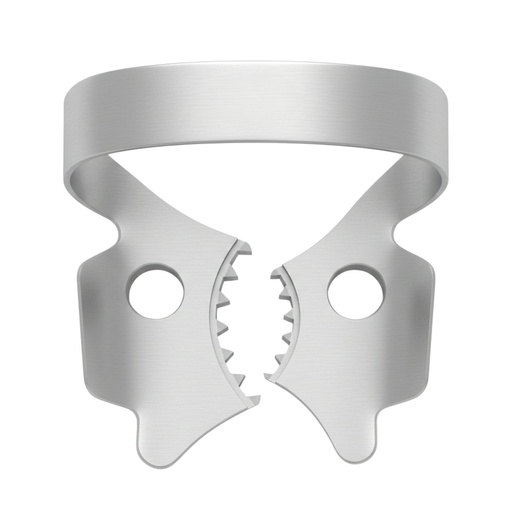 Rubber dam clamp 12AMolar clampAnchors the dam on a lower molar.View instrument →
Build your restorative set
Stainless steel, ErgoSlip non-stick and economical ErgoLite versions of the patterns you use every day.
Questions
Frequently asked questions
What instruments are used in restorative dentistry?
Isolation instruments (rubber dam), cutting instruments (excavators, chisels, hatchets, gingival margin trimmers), placing and shaping instruments (plastic filling instruments, composite spatulas, pluggers, burnishers, carvers) and matrix systems.
What are the hand cutting instruments in operative dentistry?
Excavators (spoon excavators, hatchets, hoes and angle formers) and chisels (straight, Wedelstaedt, binangle, enamel hatchets and gingival margin trimmers).
What is G.V. Black's instrument formula?
A number code on cutting instruments: blade width in tenths of a millimetre, blade length in millimetres and blade angle in centigrades. A 4-number code adds the cutting-edge angle as the second number.
What instrument is used to place composite?
A plastic filling instrument or composite spatula carries it into the cavity, a plugger packs it, and a burnisher or carver shapes it. Non-stick coated instruments keep the composite from sticking.
What is a spoon excavator used for?
Removing soft carious dentine with a scooping motion. Round (discoid) and oval spoons come in several sizes; smaller sizes are used close to the pulp.