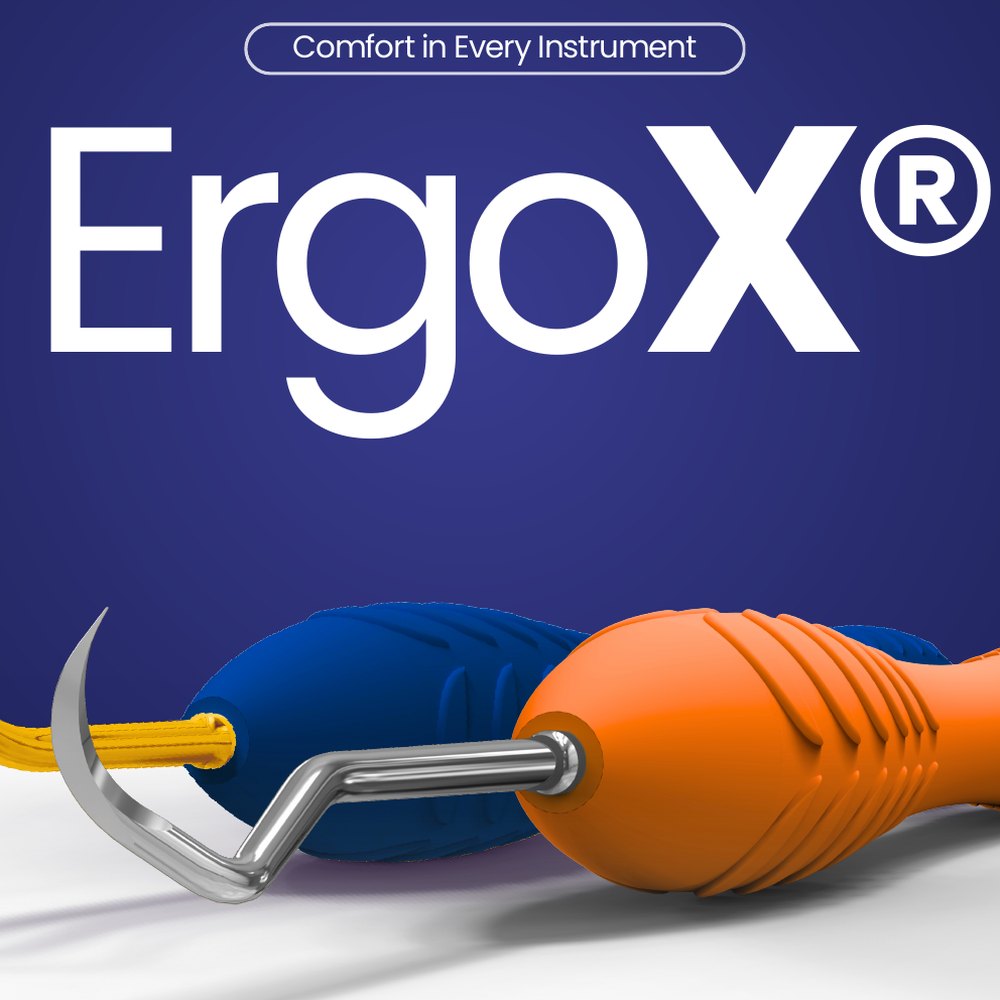
Periodontics · ErgoDenta catalog 2026
Periodontal Instruments
Scalers, curettes and instrument kits for periodontal care — standard, mini and rigid patterns, alongside the ErgoRazor® range. Choose the working ends and handles that suit your practice.
with ErgoRazor®
 ↓
↓
The periodontal workflow
The right instrument for every step
Periodontal therapy moves from assessment to calculus removal, subgingival debridement and long-term maintenance. Each step asks something different of the working end — a blunt, marked tip to measure, a pointed tip for supragingival deposits, a rounded curette that adapts to the root below the gumline.
- 01Diagnosis
Assess
Measure pocket depths, bleeding and furcations before any treatment decision.
- 02Scaling
Remove supragingival calculus
Sickle scalers and hoes remove heavy deposits above the gumline and in contact areas.
- 03Root planing
Subgingival debridement
Universal and Gracey curettes adapt to the root surface below the gumline for scaling and root planing.
- 04Implants
Implant maintenance
Titanium working ends clean implant surfaces without scratching them.
- 05Maintenance
Keep every edge sharp
A sharp edge needs less pressure and removes calculus in fewer strokes. ErgoRazor® keeps its edge up to 3× longer.
Shop by instrument type
Periodontal instrument categories
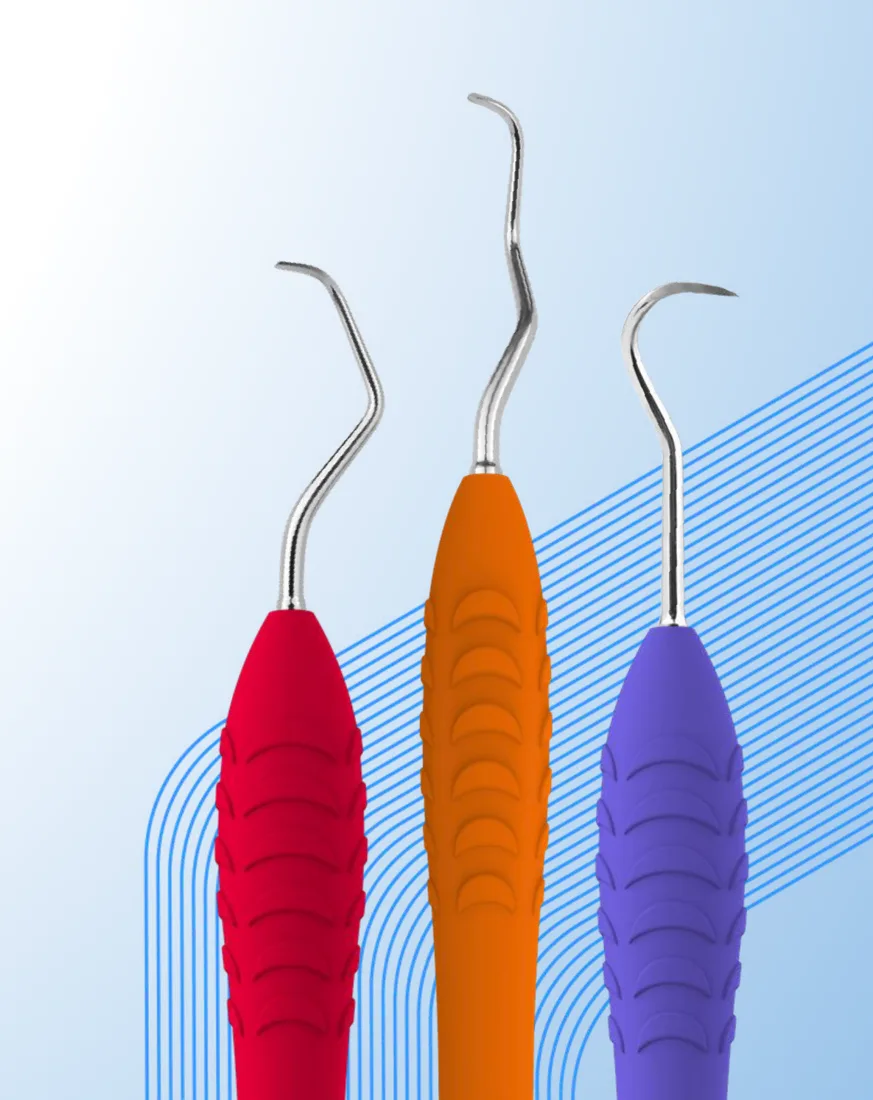
Every pattern is available on several handle systems, so you can keep the working end you know and choose the grip that suits your hand.
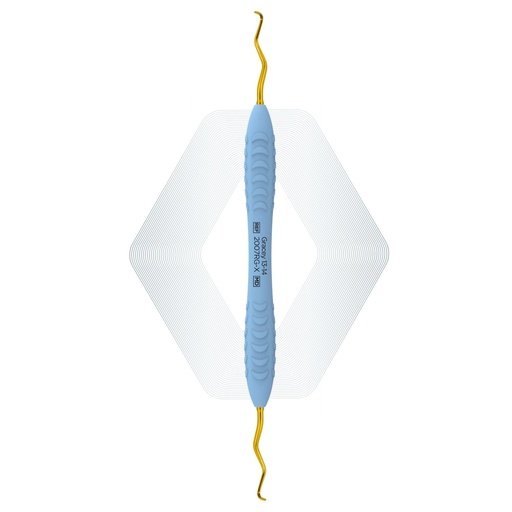
Gracey Curettes
91 instrumentsArea-specific curettes with one cutting edge and a 70° offset blade — standard, mini and rigid, numbered 1/2 to 17/18, plus titanium versions for implants.
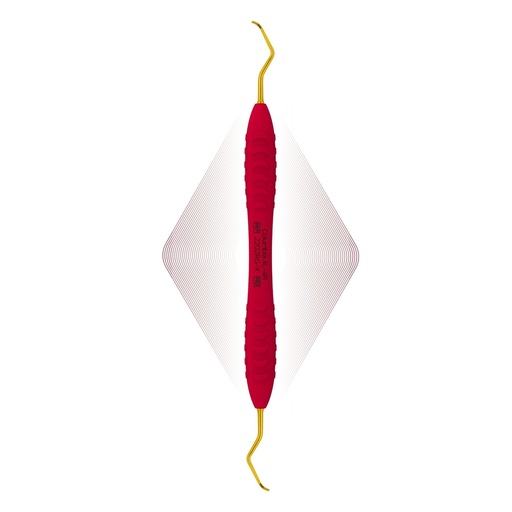
Universal Curettes
39 instrumentsTwo cutting edges and a 90° face that adapt to every surface — Columbia, Barnhart, Langer, McCall and mini patterns.
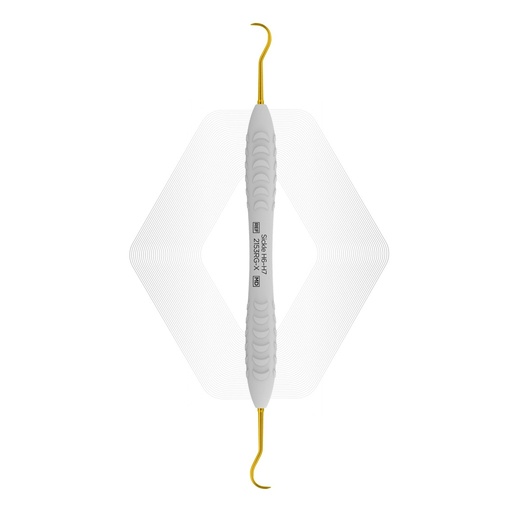
Sickle Scalers
48 instrumentsPointed, triangular working ends for supragingival calculus — H6/H7, 204S, 204SD, micro and mini sickles.
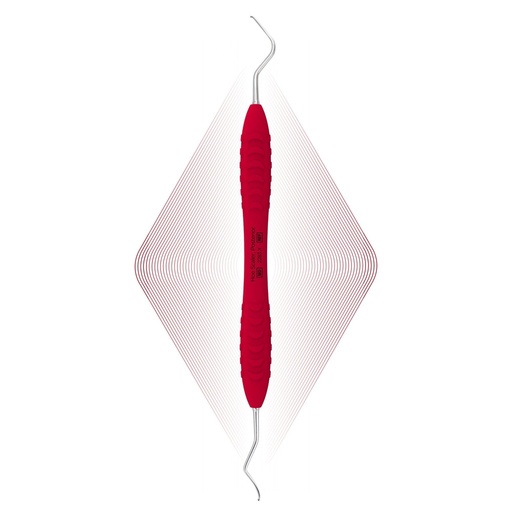
Hoe Scalers
3 instrumentsAnterior, posterior and lateral hoes for heavy, ledge-type calculus on accessible surfaces.
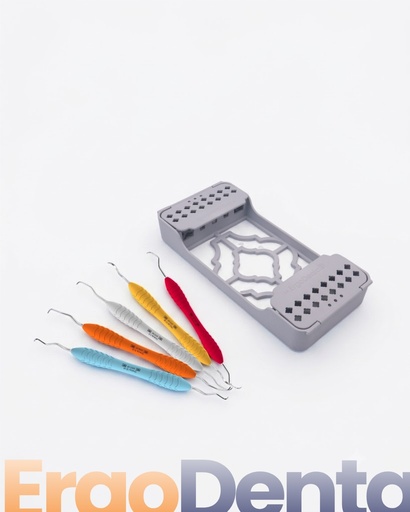
Perio Kits
5 instrumentsReady-made sets for diagnostics, basic perio, hygienist and all-round periodontal work.
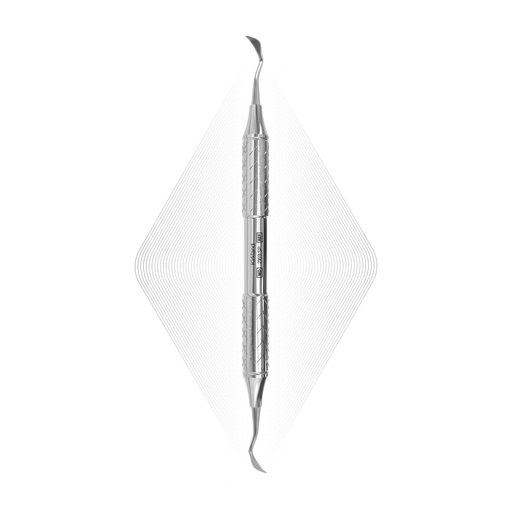
Choose your grip
Same working end. Your choice of handle.
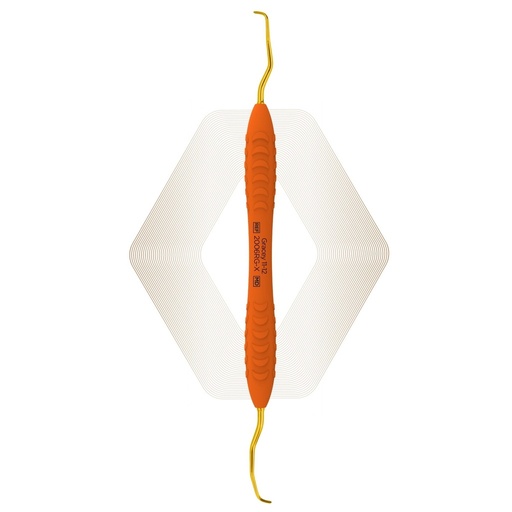
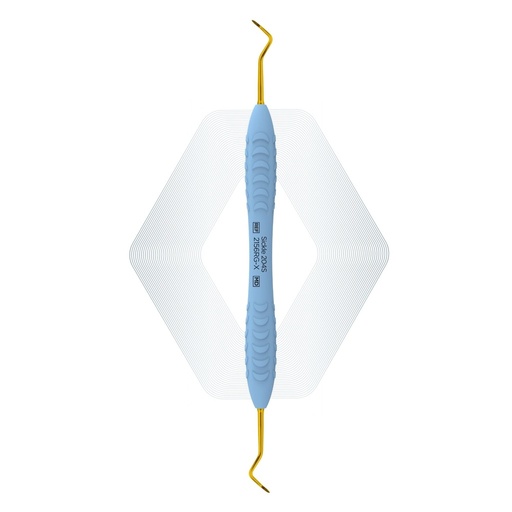
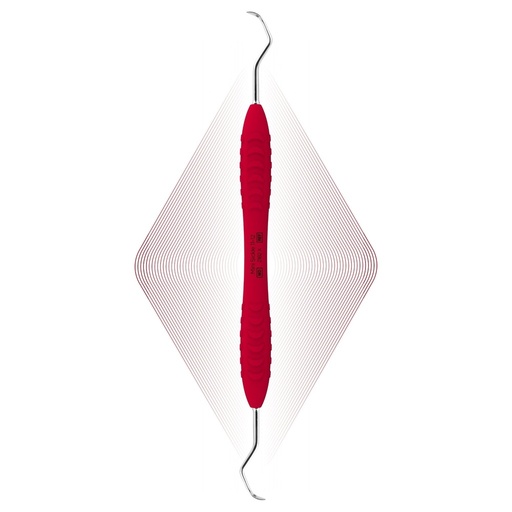
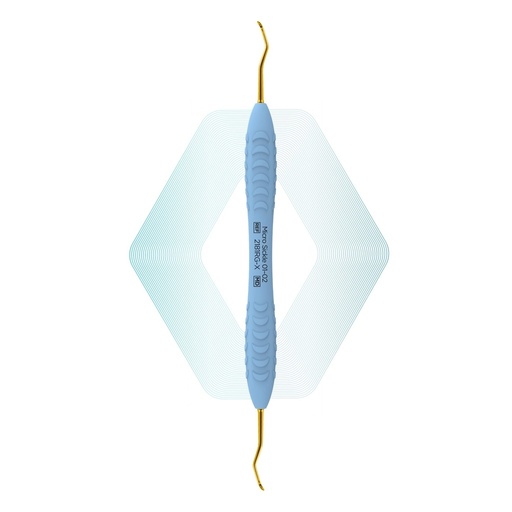
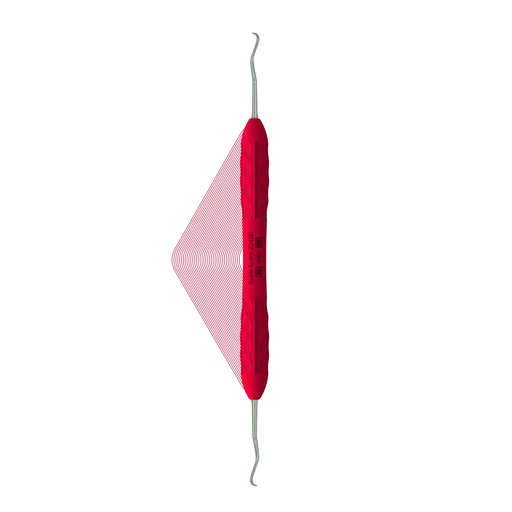
Periodontal work means thousands of small, controlled strokes a day. A wider, lighter handle needs less pinch force — so every perio pattern comes on several handles. Below: the same Gracey 11-12 on each of them.
ErgoSteel
ErgoX® · ErgoLite
ErgoX® Plus

Our original ergonomic handle: balanced and comfortable for everyday perio work, in 15 colours for colour-coding.
Explore ErgoX® →
Stable grip, reduced pinch force and less fatigue: ergonomic comfort for long sessions.
Explore ErgoX® Plus →
A practical, economical handle option for everyday clinical work, in bright colours.
Explore ErgoLite →
Classic knurled hollow steel for maximum tactile feedback, in S, SS and SP diameters.
Explore ErgoSteel →ErgoRazor® — stays sharp up to 3× longer
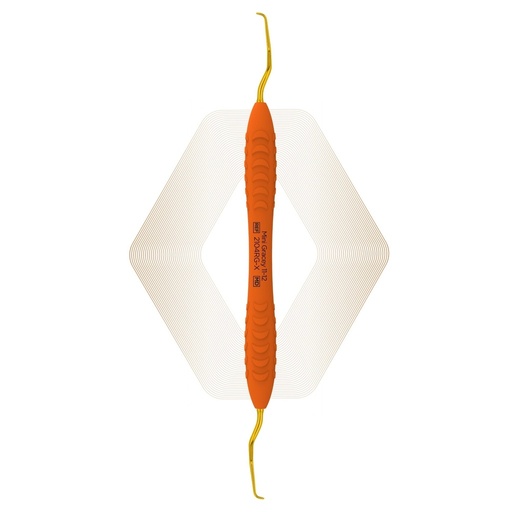
Treated working ends on ErgoX®, ErgoX® Plus and steel handles. Fewer sharpenings, less pressure per stroke, and a gold or black finish you can spot on the tray.
Discover ErgoRazor® →
Learn more
Periodontal instrument guides
Practical, chairside guides from the ErgoDenta blog — patterns, technique and how to choose.
- Periodontal instruments — what periodontists use
- Types of periodontitis — stages, grades and can it be cured?
- Gracey Curettes — Complete Numbering Guide
- Universal vs Gracey Curette
- Sickle Scalers vs. Curettes
- Sickle Scalers Explained — H6/H7, 204S, 204SD
- Hoe Scaler — When to Use It
- Periodontal Probes Guide
- When Does a Curette Need Sharpening?
- Implant-Safe Titanium Instruments
- The Hygienist's Starter Kit
- Top 7 Hygienist Instruments
- ErgoRazor — The Sharpest Upgrade
- Dental Instruments Names List (PDF)
Questions
Periodontal Instruments — FAQ
What instruments do periodontists use?
Assessment instruments (mouth mirror, periodontal probes, Nabers furcation probe, explorer), scalers and curettes for non-surgical therapy, implant-safe curettes, and a surgical set: periodontal knives, periosteal elevators, tissue forceps, micro scissors and micro needle holders. Periodontal instruments guide →
What are the instruments used in periodontology?
They are usually grouped into seven types: periodontal probes, explorers, scaling and root planing instruments (sickles, curettes, hoes, files, chisels), ultrasonic and sonic scalers, implant instruments, cleaning and polishing instruments, and surgical instruments. See all seven groups →
What are the basic hand instruments used in periodontics?
A mouth mirror, a periodontal probe, an explorer, a sickle scaler, a universal curette and a few Gracey curettes, typically 5-6, 11-12 and 13-14. Together they cover assessment, calculus removal and root planing in every region. The basic set explained →
What is the difference between a scaler and a curette?
A scaler has a pointed tip and is made for calculus above the gumline. A curette has a rounded toe and back, so it can go below the gumline and adapt to the root surface without cutting the soft tissue.
Which Gracey curettes do I need?
Most clinicians start with Gracey 5/6 (anteriors and premolars), 7/8 (posterior buccal and lingual), 11/12 (posterior mesial) and 13/14 (posterior distal). Mini Graceys add a shorter blade for deep, narrow pockets and furcations.
Can I use steel curettes on dental implants?
Stainless steel can scratch titanium implant surfaces. For implant maintenance, use instruments with titanium working ends, such as ErgoDenta’s blue titanium curettes.
How often should periodontal instruments be sharpened?
Scalers and curettes should be checked at every use and sharpened as soon as the edge reflects light or slides over calculus. ErgoRazor® instruments keep their edge up to 3× longer between sharpenings.
What are the 7 types of periodontitis?
The 7 types come from the 1999 AAP classification: chronic, aggressive, periodontitis as a manifestation of systemic disease, necrotizing periodontal diseases, periodontal abscesses, perio-endo lesions, and developmental or acquired conditions. Since 2017, chronic and aggressive periodontitis are one disease, described by stage I–IV and grade A–C. Types, stages and grades →
Can you ever get rid of periodontitis?
Gingivitis is fully reversible. Lost attachment and bone from periodontitis do not grow back on their own, but the disease can be stopped and kept stable for life with treatment, good home care, risk-factor control and regular supportive care. Can periodontitis be cured? →
What's the worst gum disease you can have?
Among common cases, stage IV grade C periodontitis is the most severe. The most aggressive forms are the necrotizing periodontal diseases; at the extreme end is noma, a rare gangrene seen mainly in severely malnourished children. Read more →
Building a periodontal set for your clinic or school?
Tell us what you use today — we will suggest patterns, handles and quantities, and send samples on request.
Contact our teamFind a local distributor